
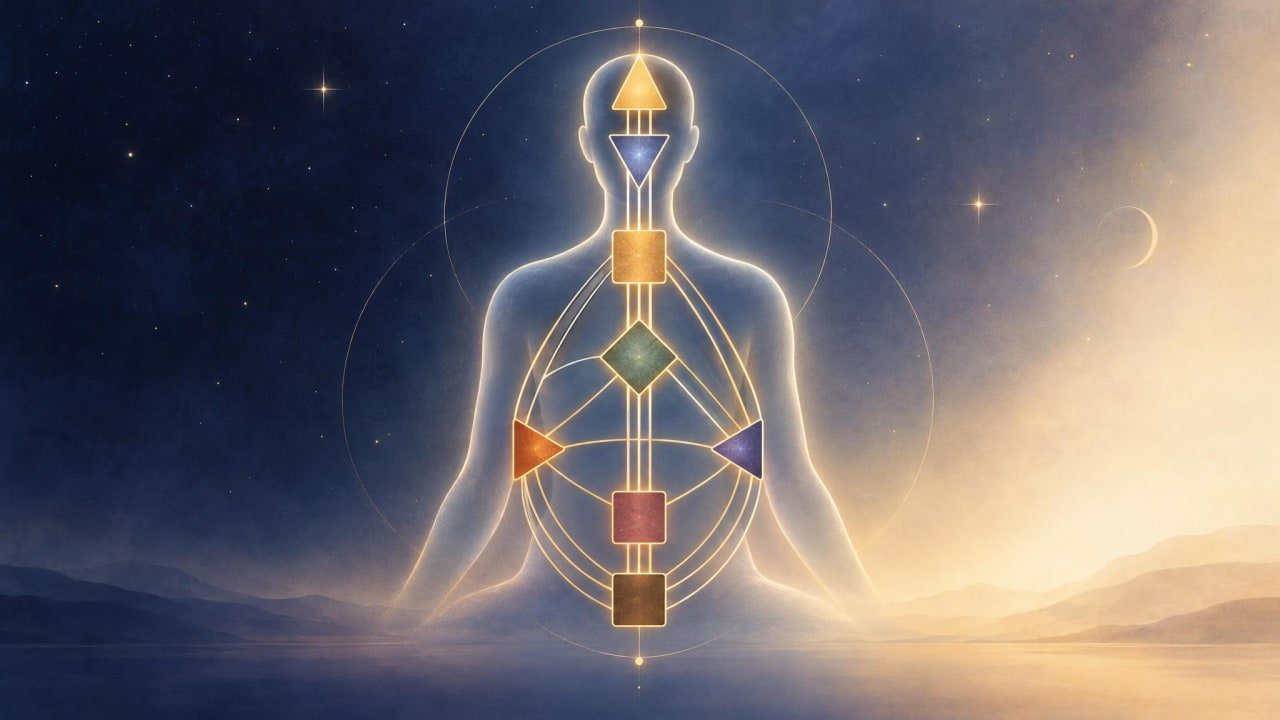
Have you ever wondered why some people thrive on doing many things at once while others need quiet time before making any decision? Human Design is a system that offers one way to explore these differences. Many people use it as a mirror for self-understanding: a language for how they make decisions, use their energy and relate to others.
What Is Human Design?
Human Design was introduced in 1987 by Ra Uru Hu. It blends ideas from astrology, the I Ching, the Kabbalah and the chakra system into a single chart called a bodygraph. Your chart is calculated from your birth date, time and place.
It is important to say clearly: Human Design is not scientifically validated. It works best as a reflective tool, a set of questions and ideas you can test against your own experience, rather than a set of rules about who you are.
What You Need for Your Chart
- Your date of birth
- Your exact time of birth (as precise as possible)
- Your place of birth
The 5 Human Design Types
Generator
Generators are described as having steady, sustainable life-force energy. Their strategy is to respond to what life brings rather than initiating from the mind. When aligned, they are said to feel satisfaction; when not, frustration. Generators are often cited as the most common type.
Manifesting Generator
A blend of Generator and Manifestor, often described as fast-moving and multi-passionate. Their strategy is also to respond, and then to inform others before acting. Their signature feelings are satisfaction and peace; frustration and anger may signal misalignment.
Projector
Projectors are described as natural guides who see others clearly. Their strategy is to wait for the invitation before sharing their guidance in major areas of life. When recognized, they feel success; when not, bitterness.
Manifestor
Manifestors are described as initiators who can start things on their own. Their strategy is to inform others before acting, which helps reduce resistance. Their signature is peace; anger may signal misalignment.
Reflector
Reflectors are the rarest type and are described as mirrors of their environment. Their strategy is to wait a lunar cycle, roughly 28 days, before major decisions. Their signature is surprise; disappointment may signal misalignment.
Authority and Centers, Briefly
Beyond your type, your chart shows your inner authority, described as the most reliable way for you to make decisions, such as following your emotions over time or trusting a gut response. It also shows nine centers, similar to the chakras, which are either “defined” (consistent energy) or “open” (where you may take in and amplify others’ energy).
Using Human Design for Self-Reflection
Rather than treating your chart as a label, try using it as a set of questions:
- Does my described strategy match how my best decisions have actually been made?
- When do I feel frustrated, bitter, angry or disappointed, and what was happening just before?
- Where might I be taking on energy that is not mine?
- What would it look like to give myself more of what my design says I need?
You can generate your Human Design chart in the Empower Soul Path app and explore your type, strategy, authority and centers alongside your other reflections.
A gentle note: Human Design is a reflective framework, not a scientific or psychological assessment. Take what resonates, leave what does not, and trust your own lived experience above any chart.
Frequently asked questions
What is Human Design?
Human Design is a system introduced in 1987 by Ra Uru Hu that combines ideas from astrology, the I Ching, the Kabbalah and the chakras into a personal chart called a bodygraph, calculated from your birth data.
What are the 5 Human Design types?
The five types are Generator, Manifesting Generator, Projector, Manifestor and Reflector. Each has a described strategy for making decisions and using energy.
Is Human Design scientific?
No. Human Design is not scientifically validated. Many people use it as a reflective tool for self-understanding rather than as a factual description of who they are.