Tag: inner child healing

  • Inner Child Affirmations: 20 Gentle Words for Your Younger Self (+ Soothing Affirmation Song)

    Inner Child Affirmations: 20 Gentle Words for Your Younger Self (+ Soothing Affirmation Song)

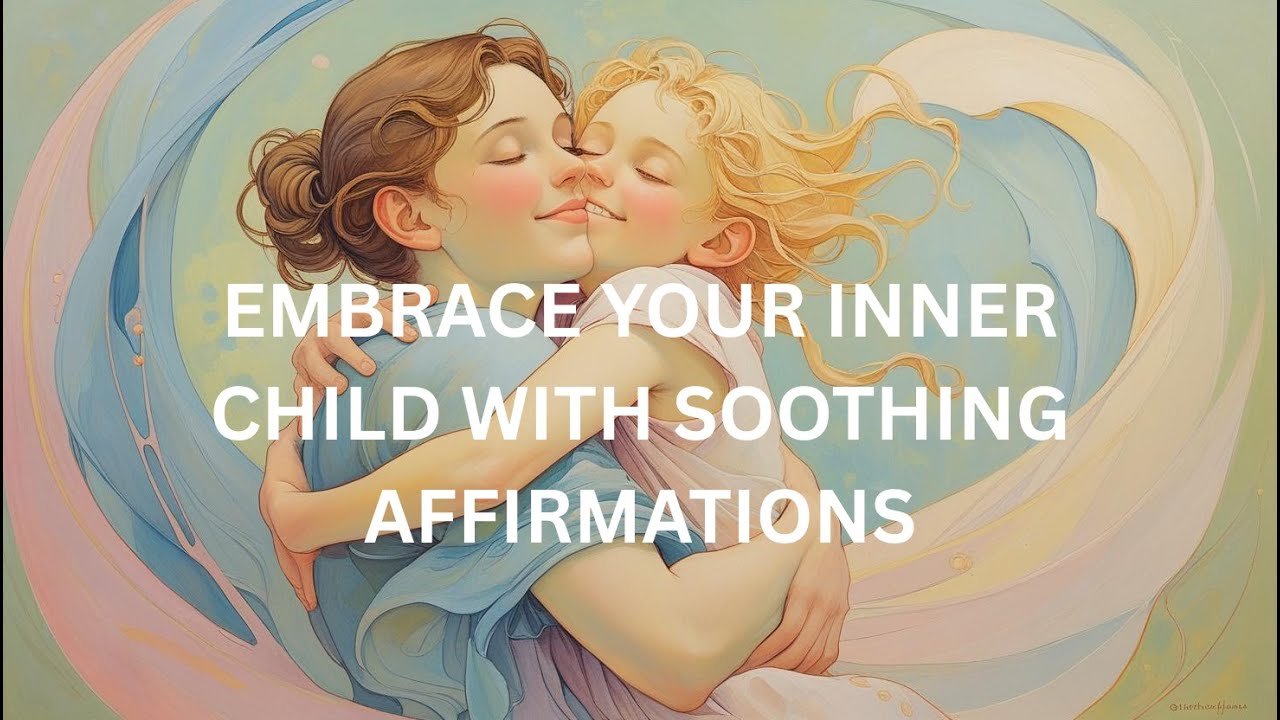
    Affirmations are short, simple sentences we repeat to ourselves until they begin to feel true. When they are spoken to our inner child, they become something more: the gentle, reassuring words the younger version of us has been waiting to hear.

    “I Am Whole, I Am Free” is a soothing affirmation song created for this journey. You can listen to it as a meditation, sing along, or let it play softly while you journal.

    What Are Inner Child Affirmations?

    Inner child affirmations are statements of safety, love and worth directed toward the younger parts of ourselves. Many of the beliefs we carry, such as “I am too much,” “I am not enough” or “love must be earned,” were formed in childhood. Affirmations offer a new, kinder message to repeat until it starts to take root.

    As the song says: “I see the child I once denied, and hold them safe where love resides.”

    20 Gentle Inner Child Affirmations

    Safety

    • I am safe now.
    • I can rest. I do not have to be on guard.
    • My feelings are welcome here.
    • I am allowed to take up space.

    Love and belonging

    • I am loved just as I am.
    • I do not have to earn love.
    • I belong.
    • I am worthy of care and gentleness.

    Worth

    • I am enough.
    • I am whole.
    • My pain does not define me.
    • I am no longer bound by guilt or shame.

    Freedom and play

    • I am free to be me.
    • It is safe to play, laugh and imagine.
    • I can say no, and I can say yes.
    • I am allowed to change and grow.

    Healing and trust

    • I breathe in love and let it flow.
    • Through the cracks, the light pours in.
    • I choose the healing I have found.
    • I am here for you, little one. I will not leave you.

    How to Use These Affirmations

    • Say them out loud. Choose two or three that touch you and say them slowly each morning or before sleep.
    • Use the mirror. Look into your own eyes and speak to yourself as you would to a small child you love.
    • Place a hand on your heart. Physical touch can help the words feel more real in your body.
    • Write them down. Keep them on a note by your bed or as your phone wallpaper.
    • Listen to the song. Let the melody carry the words when your own voice feels hard to find.

    It is normal if some affirmations feel untrue at first. Notice the resistance with curiosity, and choose words that feel just one step kinder than your current belief.

    A gentle note: inner child work can bring up strong feelings and memories. Go at your own pace, take breaks when you need to, and if difficult emotions stay with you, please reach out to a licensed therapist or counselor. This is a reflective practice, not a substitute for professional care.

    Continue Your Inner Child Journey

    Pair these affirmations with a deeper practice: try the guided inner child healing meditation, or write a letter to your inner child using our journaling prompts.

    If you would like to keep noticing your patterns over time, the Empower Soul Path app offers guided check-ins for your emotions and body signals.

  • How to Write a Letter to Your Inner Child: A Gentle Journaling Practice (+ Prompts)

    How to Write a Letter to Your Inner Child: A Gentle Journaling Practice (+ Prompts)

    Some of the kindest words we ever need to hear are the ones no one said to us when we were young. Writing a letter to your inner child is a simple journaling practice that lets you finally say them, to the younger version of yourself who is still, in many ways, living inside you.

    In this short video, I share how this practice works and why it can feel so powerful.

    What Is an Inner Child Letter?

    An inner child letter is a letter you write, as the adult you are today, to yourself at a younger age. You might choose a specific age, such as six or ten, or simply write to “little me.” The purpose is to offer the love, reassurance, attention and guidance that the younger you needed but may not have received.

    Many people also write a second kind of letter: one to a parent, caregiver or family member, expressing what they needed to say and never could. These letters are usually not sent. They are for you.

    Why This Practice Can Feel So Powerful

    • It gives a voice to feelings that may have been unspoken for years.
    • It shifts you from judging your younger self to understanding them.
    • It lets you become the caring presence your younger self was looking for.
    • It can reveal patterns, such as searching for love or approval in the wrong places, that began long ago.

    How to Write a Letter to Your Inner Child

    1. Create a quiet moment. Find a private space, take a few slow breaths and, if it helps, look at a photo of yourself as a child.
    2. Choose an age. Notice which age comes to mind first. That younger self may have something to tell you.
    3. Begin with warmth. Start with their name or a loving greeting, such as “Dear little one.”
    4. Acknowledge what they went through. Name what was hard, without minimizing it. “I know you felt alone. I know you tried so hard.”
    5. Say what they needed to hear. Offer the words that were missing: love, safety, permission, pride.
    6. Offer guidance and hope. Share what you know now that they could not know then.
    7. Close with a promise. Let them know how you will care for them from now on.

    Words Your Inner Child May Need to Hear

    You are loved. You are enough. You are free to be you.

    • It was never your fault.
    • Your feelings make sense, and they are welcome here.
    • You did the best you could with what you had.
    • You do not have to earn love.
    • I am here now, and I am not going anywhere.
    • I am so proud of you.

    Inner Child Journaling Prompts

    • What did I need most at this age that I did not receive?
    • What do I wish someone had said to me back then?
    • What advice would I give my younger self today?
    • What made my younger self feel happy and free?
    • Where do I still see this younger part of me showing up in my life now?
    • What is one way I can give my inner child love and attention this week?

    You can also share your answer to the question from the video in the YouTube comments: What would you say to your younger self?

    A gentle note: inner child work can bring up strong feelings and memories. Go at your own pace, take breaks when you need to, and if difficult emotions stay with you, please reach out to a licensed therapist or counselor. This is a reflective practice, not a substitute for professional care.

    Continue Your Inner Child Journey

    Writing is one doorway. You might also like the guided inner child healing meditation, where you meet your younger self in a gentle visualization, and our inner child affirmations to repeat each day.

    If you would like to keep noticing your patterns over time, the Empower Soul Path app offers guided check-ins for your emotions and body signals.

  • Guided Inner Child Healing Meditation: Meet Your Younger Self and Release What You Have Carried

    Guided Inner Child Healing Meditation: Meet Your Younger Self and Release What You Have Carried

    Some of the feelings we carry as adults began long before we had words for them. A fear that shows up in new situations, a quiet sense of not being enough, a sadness that seems older than the moment we are in. Inner child work invites us to meet the younger version of ourselves who first felt these things, and to offer them the care they may not have received at the time.

    This guided inner child healing meditation is a gentle, imaginative journey of about 20 minutes. You will clear and protect your energy, travel inward to meet your younger self, and symbolically release the emotional weight you may have been carrying for years.

    What Is Inner Child Work?

    The “inner child” is a way of describing the parts of us shaped by early experiences: the needs, feelings and beliefs we formed when we were young. Many people find that when they approach these parts with curiosity and compassion, old patterns become easier to understand and gently change.

    In this meditation, inner child work is approached through breath, visualization and intention. It is a reflective practice, not therapy, and it is not meant to replace support from a licensed mental health professional.

    What Happens in This Meditation

    1. Breathing and clearing. You begin with 11 slow breaths, then imagine bright light moving from the top of your head down through your body, and a shower of white light washing over you.
    2. Creating a protective space. With your hands at your heart, you imagine a warm golden light expanding within you and forming a soft glowing egg around your body, a space where only what supports you can enter.
    3. Relaxing deeper. With each exhale, heaviness such as anger or frustration flows down through your body and back into the earth.
    4. The journey inward. From the top of a hill, you walk down a spiral staircase, counting from five to one, and meet your inner protector, a presence that has always been with you.
    5. Meeting your younger self. Together you travel to the place where your story began. You find your younger self, take their hands and notice what they have been carrying, like a heavy sack on their shoulders: fear, sadness, loneliness, not feeling enough.
    6. Releasing by the fire. You acknowledge these emotions, honor where they came from, and one by one place them into a warm fire, then the whole sack, feeling lighter as they transform.
    7. Returning. You tell your younger self how proud you are of them, embrace them with love and let them go, then slowly return up the stairs and back into your body.

    How to Get the Most From It

    • Choose a quiet, private time when you will not be interrupted for about 20 minutes.
    • Sit upright or lie down, whichever feels most comfortable and safe.
    • Use headphones so you can follow the voice guidance closely.
    • Keep a journal and a glass of water nearby for afterward.
    • Let the images come naturally. There is no right answer to what you see or feel.

    A gentle note: inner child work can bring up strong emotions. You are always in charge of the pace. If something feels like too much, open your eyes, feel your feet on the ground and take a few slow breaths. If difficult memories or feelings stay with you, please reach out to a licensed therapist or counselor for support.

    Reflect After the Meditation

    Take a few quiet minutes to write about your experience:

    • How old was my younger self, and what did they seem to need?
    • Which emotion felt heaviest in the sack I was carrying?
    • What did it feel like to hear, “I am so proud of you”?
    • What is one small way I can care for my inner child this week?

    If you would like to keep noticing the patterns that come up, the Empower Soul Path app offers guided check-ins where you can reflect on your emotions and body signals over time. You may also enjoy our guided aura cleansing meditation for releasing emotional weight held in the body.

    To continue this work between meditations, try writing a letter to your inner child or repeating these inner child affirmations.

    Be Gentle With Yourself

    Meeting your inner child is not a one-time event. It is a relationship you can return to again and again, each time with a little more understanding. Every time you listen with kindness, you give both your younger self and your present self more room to feel safe and free.

    Thank you for being here. For more guided meditations, you are warmly invited to subscribe to the Empower Soul Path YouTube channel.