Blog

  • The Bird at the Window: A Symbolic Story for Self-Reflection

    The Bird at the Window: A Symbolic Story for Self-Reflection

    Story of the Day from Empower Soul Path, Subconscious Symbols.

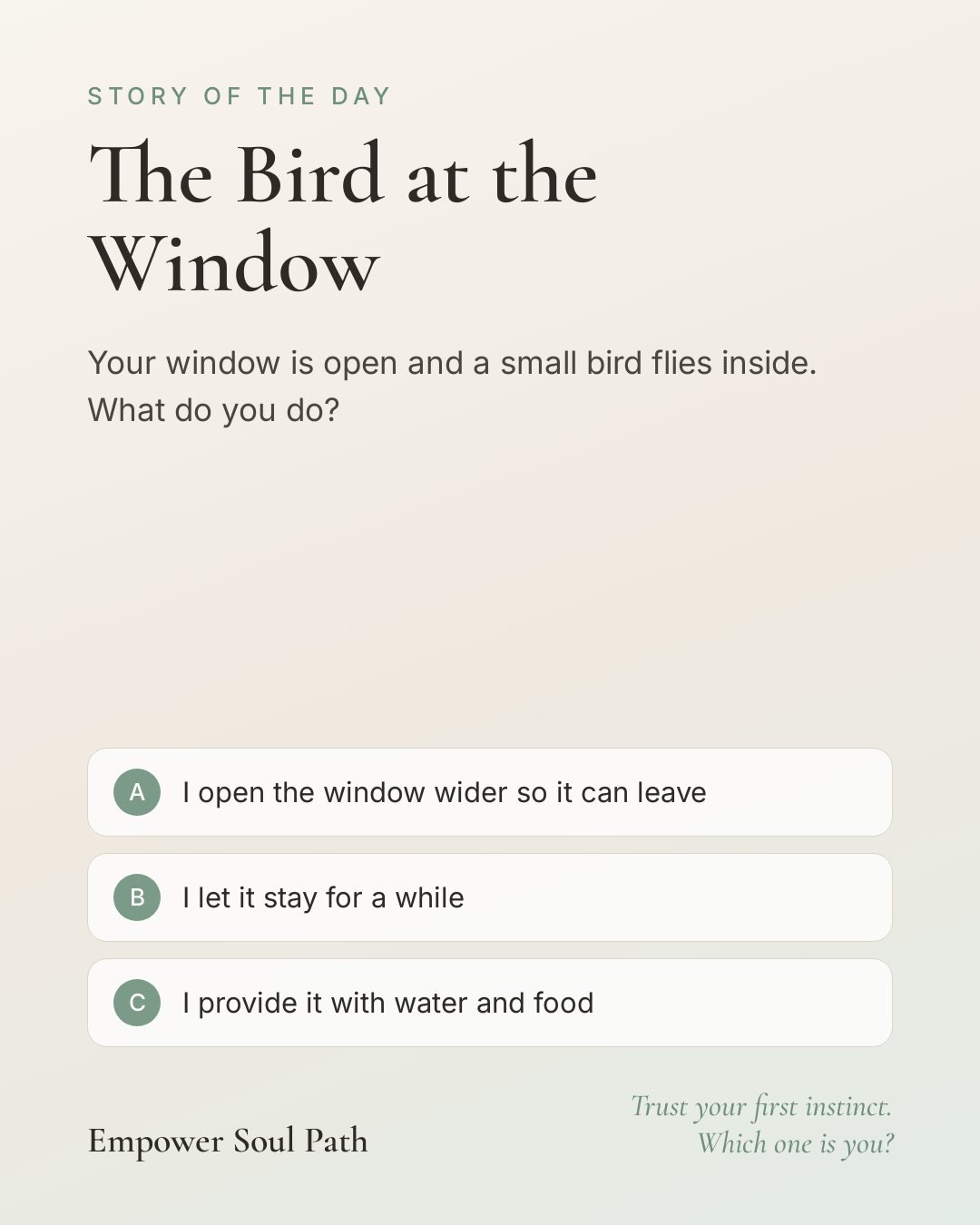
    Your window is open and a small bird flies inside. What do you do?

    What would you choose?

    A. I open the window wider so it can leave
    B. I let it stay for a while
    C. I provide it with water and food

    Read the scene once, notice which answer your body leans toward first, and go with that. In symbolic stories every choice carries an image, and the image you reach for can say something about where you are right now. There are no right or wrong answers.

    Choose your answer and see what it may reflect: https://app.empowersoulpath.org/s/window_bird?lang=en

    A question to sit with

    What has entered your life unexpectedly lately? You can write your answer in a journal, or simply hold the question in mind during the day and notice what comes up.

    About symbolic stories

    Symbolic stories are short imagined scenes with a single choice. They are a gentle way to reflect on your inner world, your relationships and your patterns through images rather than analysis. They are a lens for reflection, not a personality test or a diagnosis.

    The Empower Soul Path app has 90 symbolic stories in 9 languages, a discovery journal that keeps your choices, and a monthly symbol map that shows the themes you return to. Try today’s story here: https://app.empowersoulpath.org/s/window_bird?lang=en

  • Hidden Room: A Symbolic Story for Self-Reflection

    Hidden Room: A Symbolic Story for Self-Reflection

    Story of the Day from Empower Soul Path, Subconscious Symbols.

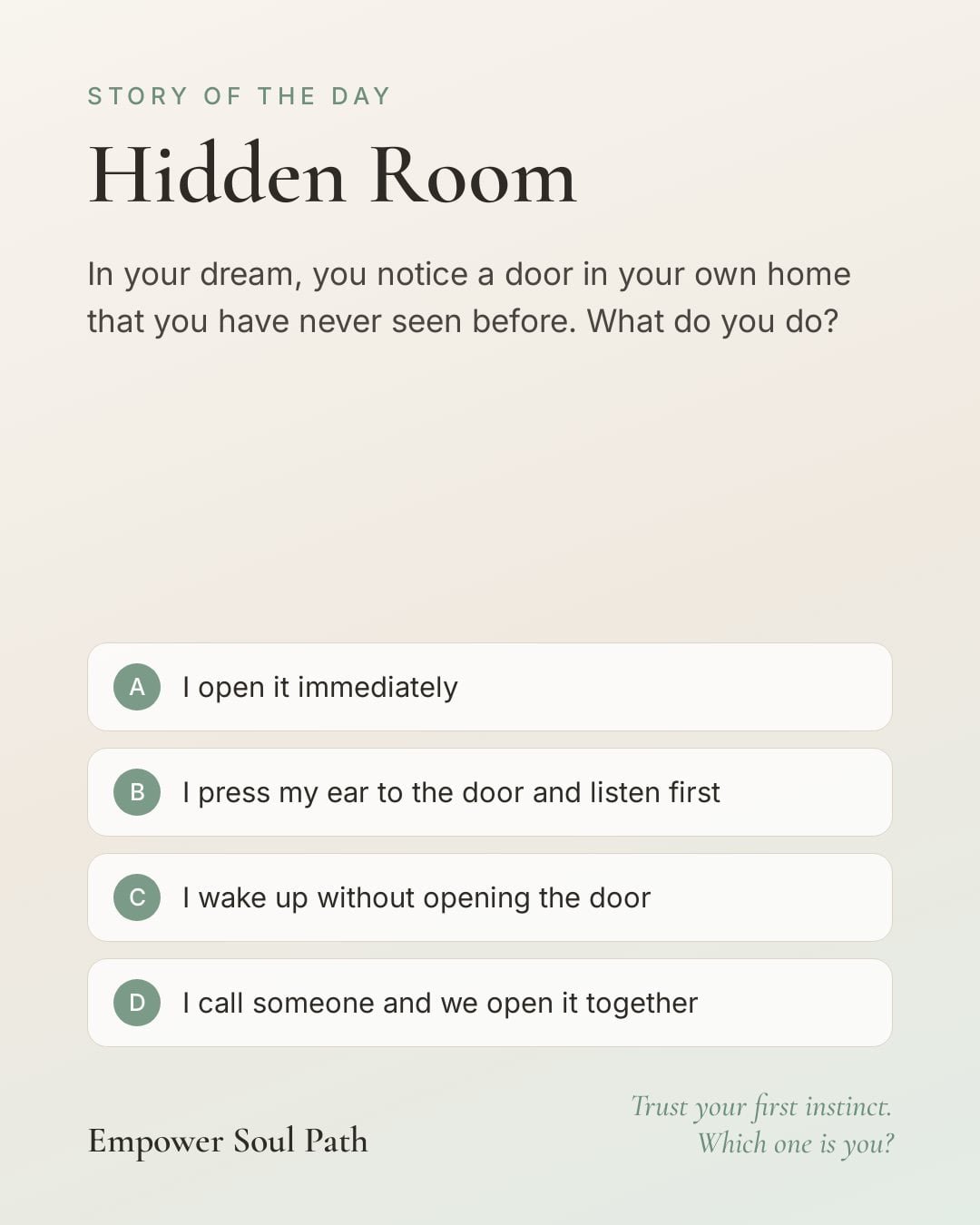
    In your dream, you notice a door in your own home that you have never seen before. What do you do?

    What would you choose?

    A. I open it immediately
    B. I press my ear to the door and listen first
    C. I wake up without opening the door
    D. I call someone and we open it together

    Read the scene once, notice which answer your body leans toward first, and go with that. In symbolic stories every choice carries an image, and the image you reach for can say something about where you are right now. There are no right or wrong answers.

    Choose your answer and see what it may reflect: https://app.empowersoulpath.org/s/hidden_room?lang=en

    A question to sit with

    Is there a room you are newly discovering within yourself? You can write your answer in a journal, or simply hold the question in mind during the day and notice what comes up.

    About symbolic stories

    Symbolic stories are short imagined scenes with a single choice. They are a gentle way to reflect on your inner world, your relationships and your patterns through images rather than analysis. They are a lens for reflection, not a personality test or a diagnosis.

    The Empower Soul Path app has 90 symbolic stories in 9 languages, a discovery journal that keeps your choices, and a monthly symbol map that shows the themes you return to. Try today’s story here: https://app.empowersoulpath.org/s/hidden_room?lang=en

  • Light in the Cave: A Symbolic Story for Self-Reflection

    Light in the Cave: A Symbolic Story for Self-Reflection

    Story of the Day from Empower Soul Path, Subconscious Symbols.

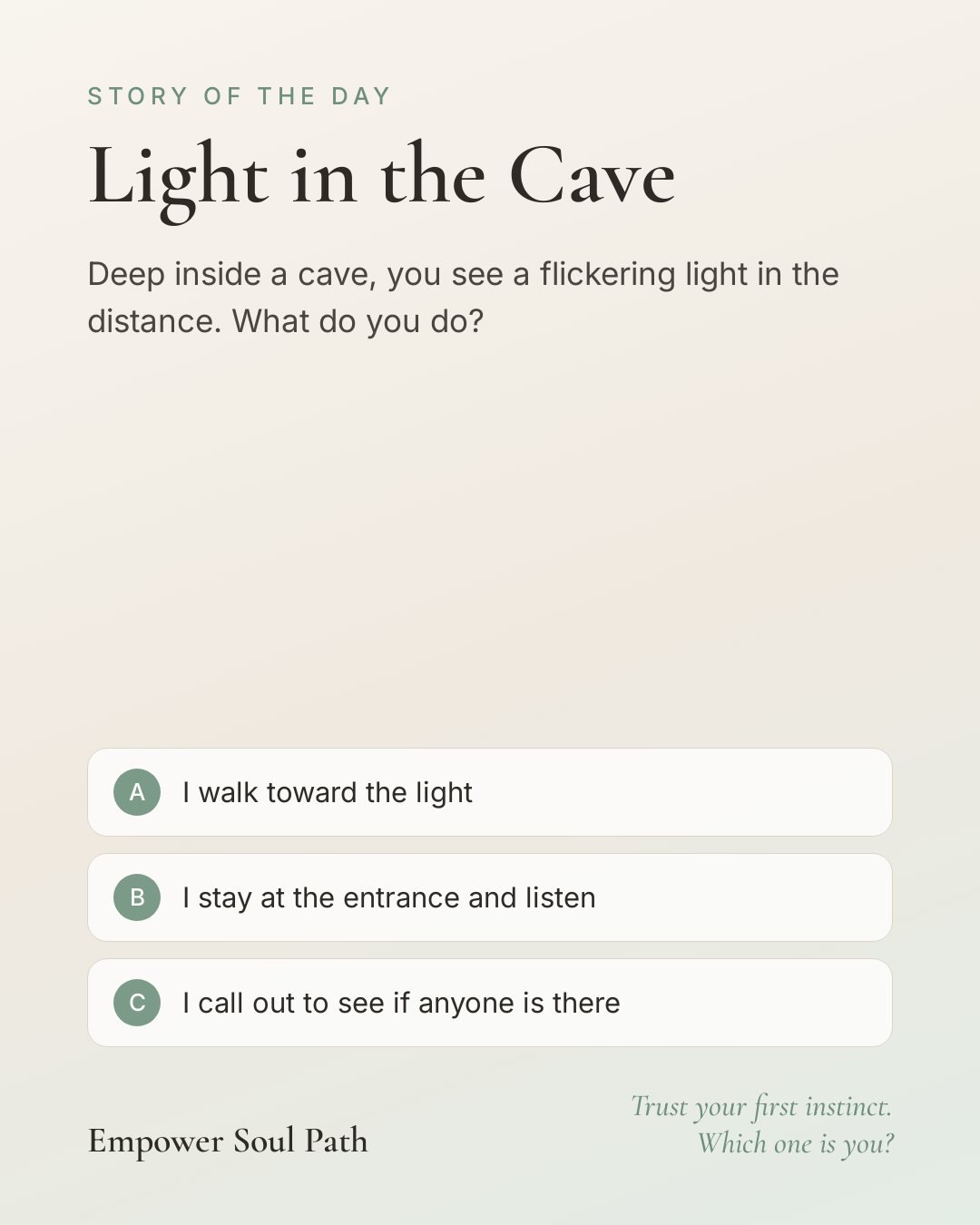
    Deep inside a cave, you see a flickering light in the distance. What do you do?

    What would you choose?

    A. I walk toward the light
    B. I stay at the entrance and listen
    C. I call out to see if anyone is there

    Read the scene once, notice which answer your body leans toward first, and go with that. In symbolic stories every choice carries an image, and the image you reach for can say something about where you are right now. There are no right or wrong answers.

    Choose your answer and see what it may reflect: https://app.empowersoulpath.org/s/cave_light?lang=en

    A question to sit with

    Is there a light calling to you from the depths of your inner world right now? You can write your answer in a journal, or simply hold the question in mind during the day and notice what comes up.

    About symbolic stories

    Symbolic stories are short imagined scenes with a single choice. They are a gentle way to reflect on your inner world, your relationships and your patterns through images rather than analysis. They are a lens for reflection, not a personality test or a diagnosis.

    The Empower Soul Path app has 90 symbolic stories in 9 languages, a discovery journal that keeps your choices, and a monthly symbol map that shows the themes you return to. Try today’s story here: https://app.empowersoulpath.org/s/cave_light?lang=en

  • A Distant City: A Symbolic Story for Self-Reflection

    A Distant City: A Symbolic Story for Self-Reflection

    Story of the Day from Empower Soul Path, Love and Relationships.

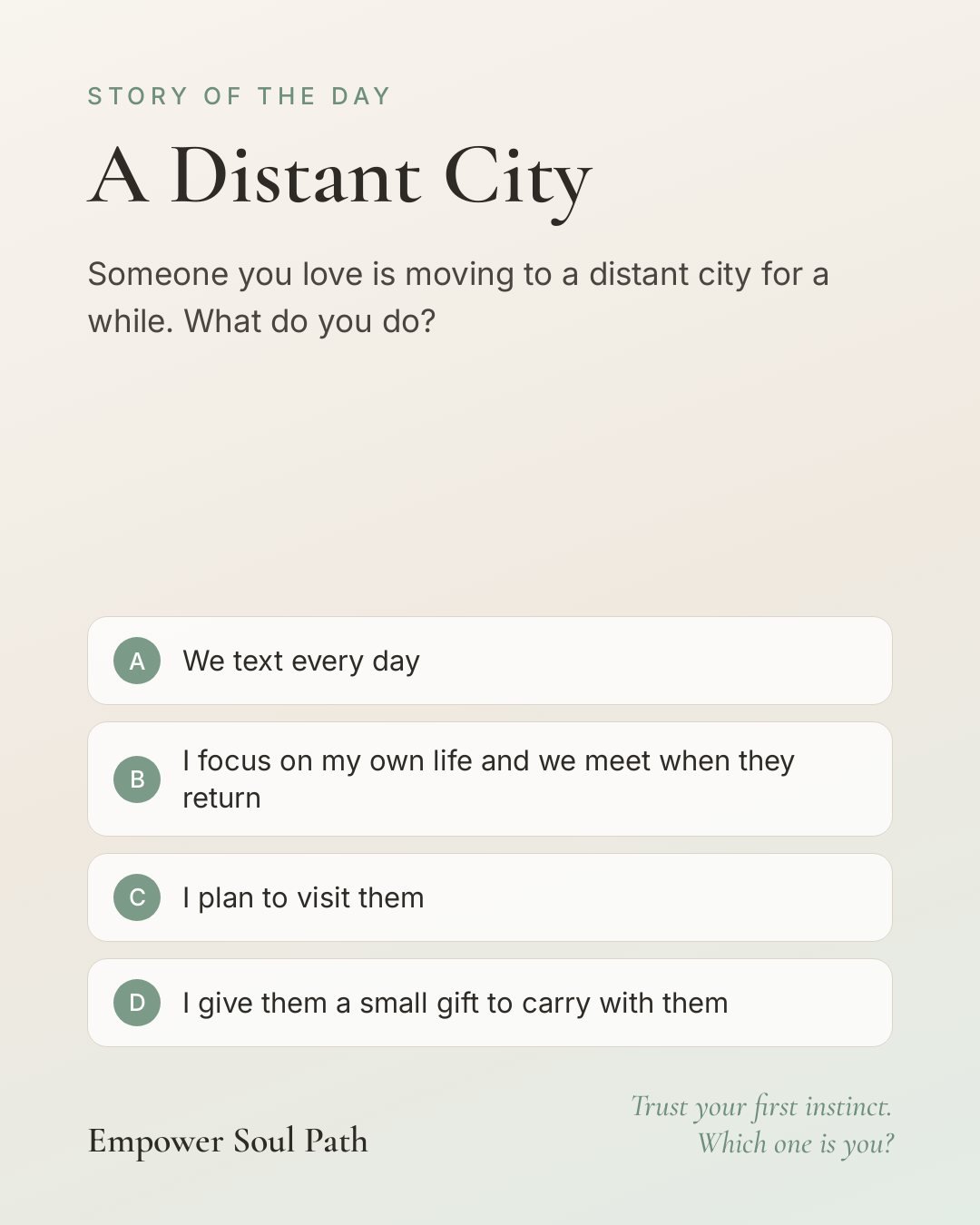
    Someone you love is moving to a distant city for a while. What do you do?

    What would you choose?

    A. We text every day
    B. I focus on my own life and we meet when they return
    C. I plan to visit them
    D. I give them a small gift to carry with them

    Read the scene once, notice which answer your body leans toward first, and go with that. In symbolic stories every choice carries an image, and the image you reach for can say something about where you are right now. There are no right or wrong answers.

    Choose your answer and see what it may reflect: https://app.empowersoulpath.org/s/far_city?lang=en

    A question to sit with

    How does distance affect a bond for you? You can write your answer in a journal, or simply hold the question in mind during the day and notice what comes up.

    About symbolic stories

    Symbolic stories are short imagined scenes with a single choice. They are a gentle way to reflect on your inner world, your relationships and your patterns through images rather than analysis. They are a lens for reflection, not a personality test or a diagnosis.

    The Empower Soul Path app has 90 symbolic stories in 9 languages, a discovery journal that keeps your choices, and a monthly symbol map that shows the themes you return to. Try today’s story here: https://app.empowersoulpath.org/s/far_city?lang=en

  • Childhood Photo: A Symbolic Story for Self-Reflection

    Childhood Photo: A Symbolic Story for Self-Reflection

    Story of the Day from Empower Soul Path, Love and Relationships.

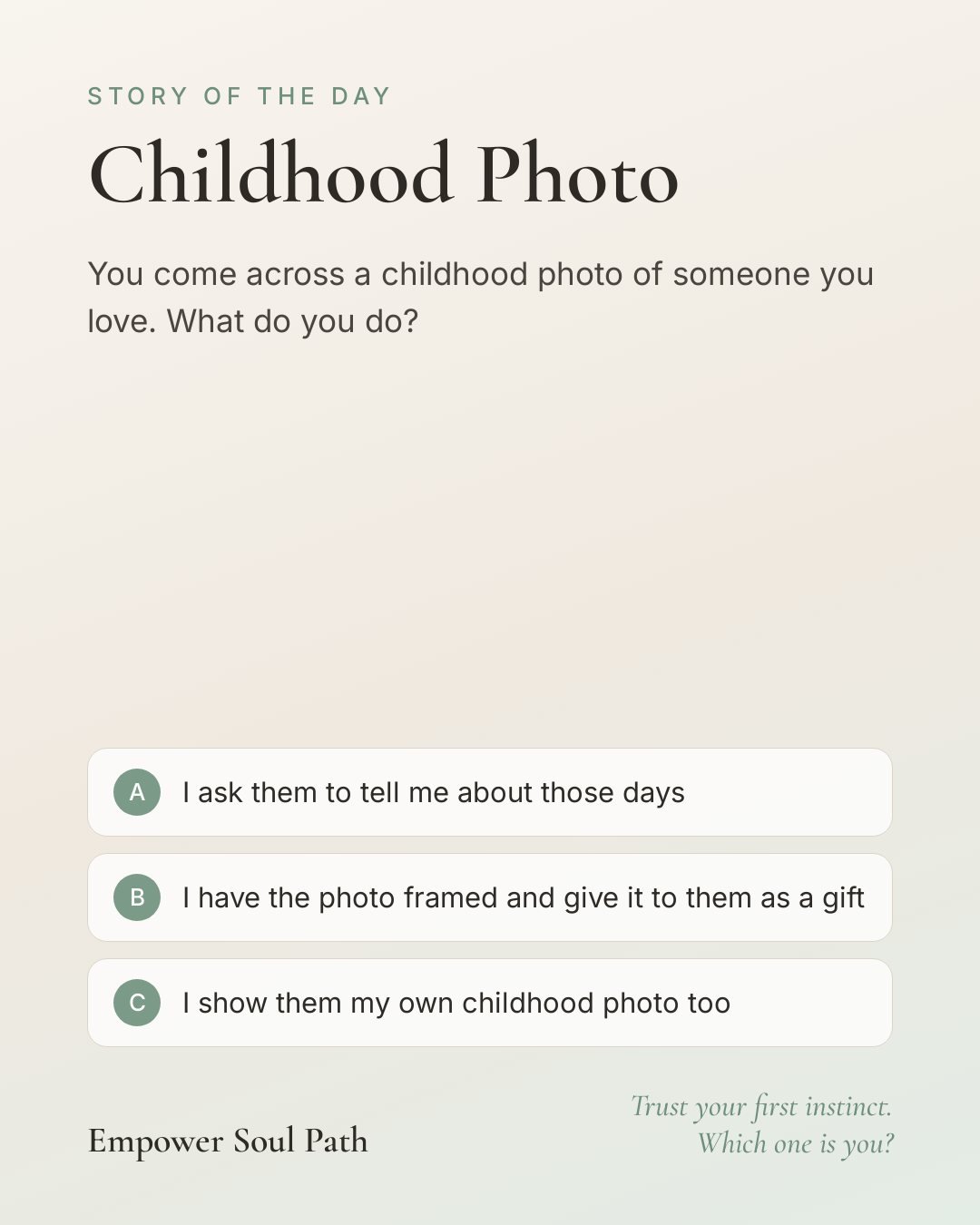
    You come across a childhood photo of someone you love. What do you do?

    What would you choose?

    A. I ask them to tell me about those days
    B. I have the photo framed and give it to them as a gift
    C. I show them my own childhood photo too

    Read the scene once, notice which answer your body leans toward first, and go with that. In symbolic stories every choice carries an image, and the image you reach for can say something about where you are right now. There are no right or wrong answers.

    Choose your answer and see what it may reflect: https://app.empowersoulpath.org/s/childhood_photo?lang=en

    A question to sit with

    Which part of your loved one would you like to get to know better? You can write your answer in a journal, or simply hold the question in mind during the day and notice what comes up.

    About symbolic stories

    Symbolic stories are short imagined scenes with a single choice. They are a gentle way to reflect on your inner world, your relationships and your patterns through images rather than analysis. They are a lens for reflection, not a personality test or a diagnosis.

    The Empower Soul Path app has 90 symbolic stories in 9 languages, a discovery journal that keeps your choices, and a monthly symbol map that shows the themes you return to. Try today’s story here: https://app.empowersoulpath.org/s/childhood_photo?lang=en

  • The Lighthouse: A Symbolic Story for Self-Reflection

    The Lighthouse: A Symbolic Story for Self-Reflection

    Story of the Day from Empower Soul Path, Inner World.

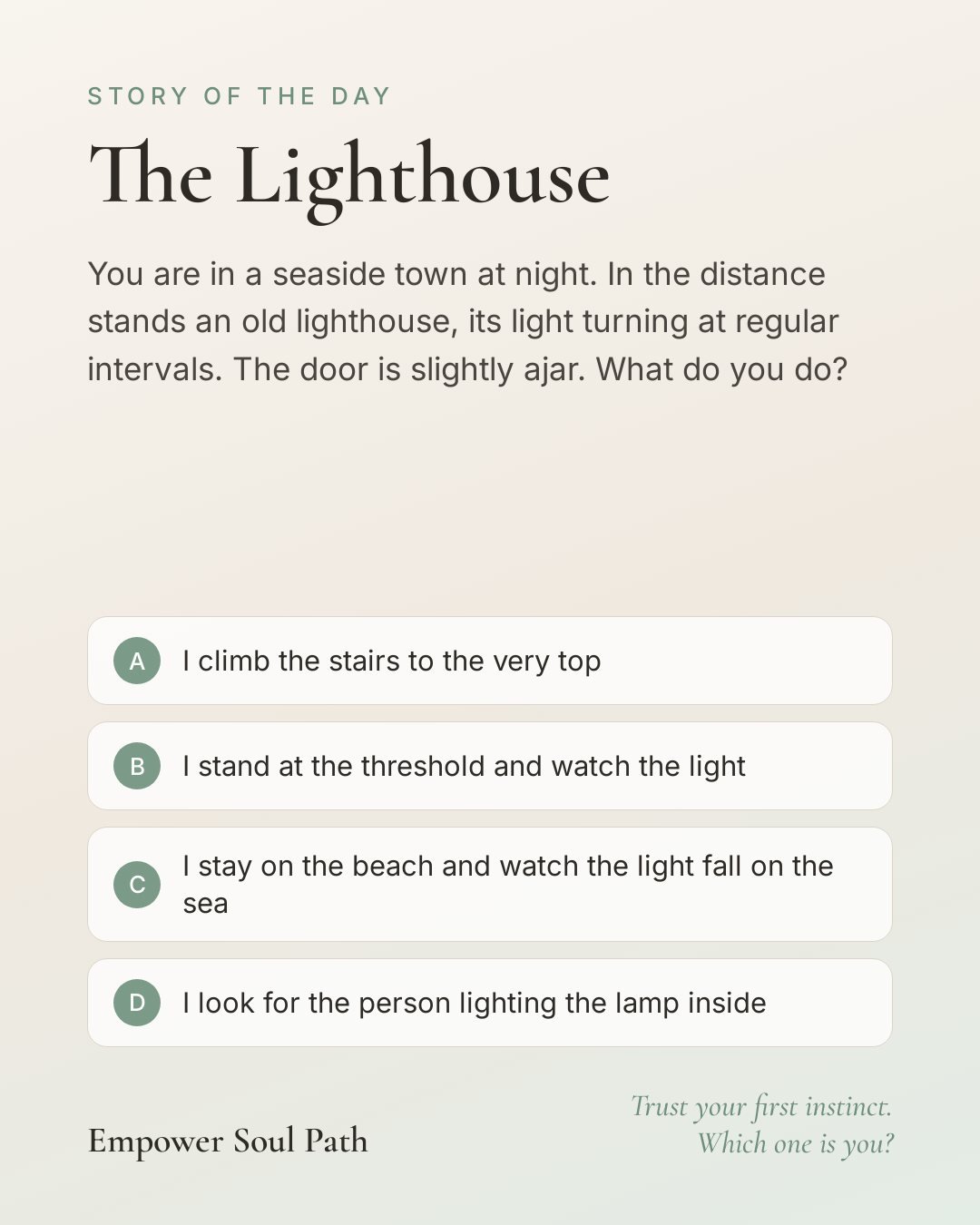
    You are in a seaside town at night. In the distance stands an old lighthouse, its light turning at regular intervals. The door is slightly ajar. What do you do?

    What would you choose?

    A. I climb the stairs to the very top
    B. I stand at the threshold and watch the light
    C. I stay on the beach and watch the light fall on the sea
    D. I look for the person lighting the lamp inside

    Read the scene once, notice which answer your body leans toward first, and go with that. In symbolic stories every choice carries an image, and the image you reach for can say something about where you are right now. There are no right or wrong answers.

    Choose your answer and see what it may reflect: https://app.empowersoulpath.org/s/lighthouse?lang=en

    A question to sit with

    What is the light guiding you in your life right now? You can write your answer in a journal, or simply hold the question in mind during the day and notice what comes up.

    About symbolic stories

    Symbolic stories are short imagined scenes with a single choice. They are a gentle way to reflect on your inner world, your relationships and your patterns through images rather than analysis. They are a lens for reflection, not a personality test or a diagnosis.

    The Empower Soul Path app has 60 symbolic stories in 9 languages, a discovery journal that keeps your choices, and a monthly symbol map that shows the themes you return to. Try today’s story here: https://app.empowersoulpath.org/s/lighthouse?lang=en

  • Why Your Jaw Tightens in the Afternoon (and What It Might Be Telling You)

    Why Your Jaw Tightens in the Afternoon (and What It Might Be Telling You)

    It often happens without you noticing. You are answering one more email, sitting in one more meeting, and somewhere around three in the afternoon your teeth are pressed together and your jaw feels like a closed door.

    The jaw is one of the quietest places where the body stores what we have not said. This article is an invitation to notice it, gently, and to get curious about what it might be holding for you.

    What the body is doing

    When we focus, concentrate or brace for something, the muscles around the jaw tend to engage. It is a natural, protective response. In the afternoon, when energy dips and the to-do list is still long, many people slip into a low, steady clench. Over a day, that small effort adds up to tension in the jaw, temples, neck and shoulders.

    If your jaw pain is strong, constant or comes with headaches, clicking or trouble opening your mouth, please talk to a dentist or doctor. What follows is not a diagnosis. It is a way of listening.

    What it might be holding, symbolically

    In body symbolism, the jaw is connected with expression, control and holding on. It is the hinge between what we think and what we say. A tight jaw can be a way of keeping words in, staying in control, or pushing through when part of us wants to stop.

    You might ask yourself:

    Is there something I wanted to say today and swallowed instead?

    Am I holding on tightly to a plan, a result or a person right now?

    Where am I pushing through when I actually need a pause?

    There are no right answers. Sometimes the jaw is simply tired. Sometimes it is carrying a sentence you have not spoken yet.

    A two-minute afternoon reset

    Try this at your desk, right now or the next time you notice the clench.

    Let your lips stay closed and allow a small space between your top and bottom teeth. Rest the tip of your tongue lightly behind your upper front teeth.

    Place your fingertips just in front of your ears, where the jaw hinges. Make three slow circles, as if you are smoothing out a wrinkle.

    Breathe in through your nose for a count of four. Breathe out through slightly parted lips for a count of six, and let the out-breath soften your face.

    Ask quietly: What am I holding right now? Notice the first word or image that comes, without judging it.

    Finish by letting your shoulders drop one more centimeter than feels natural.

    Make it a habit, not a fix

    The goal is not to force the jaw to relax once. It is to build a small daily moment of noticing. You can set a gentle reminder for 3 PM, or pair the reset with something you already do, like refilling your water glass.

    Over time, you may start to see patterns. Maybe the clench shows up on days with certain meetings, conversations or deadlines. Those patterns are information, not failures.

    Notice, then live from it

    At Empower Soul Path, we believe awareness is the first step to change. If you would like a simple way to track what your body is telling you, the Empower Soul Path app lets you log where you feel tension, explore its symbolic meaning and see your own patterns over time.

    Start here: https://app.empowersoulpath.org/welcome

    Notice what you feel. Then live from it.

  • What Is Human Design? A Beginner’s Guide to Your Chart, Type and Strategy

    What Is Human Design? A Beginner’s Guide to Your Chart, Type and Strategy

    Have you ever wondered why some people thrive on doing many things at once while others need quiet time before making any decision? Human Design is a system that offers one way to explore these differences. Many people use it as a mirror for self-understanding: a language for how they make decisions, use their energy and relate to others.

    What Is Human Design?

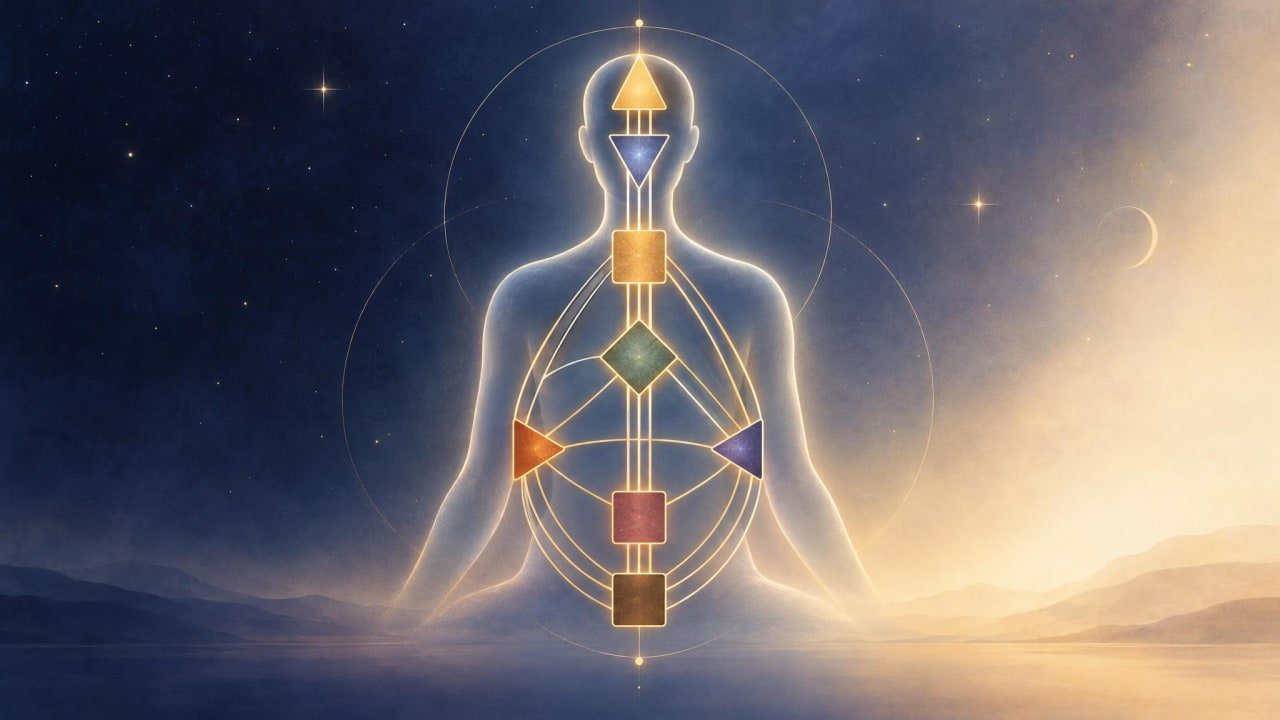
    Human Design was introduced in 1987 by Ra Uru Hu. It blends ideas from astrology, the I Ching, the Kabbalah and the chakra system into a single chart called a bodygraph. Your chart is calculated from your birth date, time and place.

    It is important to say clearly: Human Design is not scientifically validated. It works best as a reflective tool, a set of questions and ideas you can test against your own experience, rather than a set of rules about who you are.

    What You Need for Your Chart

    • Your date of birth
    • Your exact time of birth (as precise as possible)
    • Your place of birth

    The 5 Human Design Types

    Generator

    Generators are described as having steady, sustainable life-force energy. Their strategy is to respond to what life brings rather than initiating from the mind. When aligned, they are said to feel satisfaction; when not, frustration. Generators are often cited as the most common type.

    Manifesting Generator

    A blend of Generator and Manifestor, often described as fast-moving and multi-passionate. Their strategy is also to respond, and then to inform others before acting. Their signature feelings are satisfaction and peace; frustration and anger may signal misalignment.

    Projector

    Projectors are described as natural guides who see others clearly. Their strategy is to wait for the invitation before sharing their guidance in major areas of life. When recognized, they feel success; when not, bitterness.

    Manifestor

    Manifestors are described as initiators who can start things on their own. Their strategy is to inform others before acting, which helps reduce resistance. Their signature is peace; anger may signal misalignment.

    Reflector

    Reflectors are the rarest type and are described as mirrors of their environment. Their strategy is to wait a lunar cycle, roughly 28 days, before major decisions. Their signature is surprise; disappointment may signal misalignment.

    Authority and Centers, Briefly

    Beyond your type, your chart shows your inner authority, described as the most reliable way for you to make decisions, such as following your emotions over time or trusting a gut response. It also shows nine centers, similar to the chakras, which are either “defined” (consistent energy) or “open” (where you may take in and amplify others’ energy).

    Using Human Design for Self-Reflection

    Rather than treating your chart as a label, try using it as a set of questions:

    • Does my described strategy match how my best decisions have actually been made?
    • When do I feel frustrated, bitter, angry or disappointed, and what was happening just before?
    • Where might I be taking on energy that is not mine?
    • What would it look like to give myself more of what my design says I need?

    You can generate your Human Design chart in the Empower Soul Path app and explore your type, strategy, authority and centers alongside your other reflections.

    A gentle note: Human Design is a reflective framework, not a scientific or psychological assessment. Take what resonates, leave what does not, and trust your own lived experience above any chart.

    Frequently asked questions

    What is Human Design?

    Human Design is a system introduced in 1987 by Ra Uru Hu that combines ideas from astrology, the I Ching, the Kabbalah and the chakras into a personal chart called a bodygraph, calculated from your birth data.

    What are the 5 Human Design types?

    The five types are Generator, Manifesting Generator, Projector, Manifestor and Reflector. Each has a described strategy for making decisions and using energy.

    Is Human Design scientific?

    No. Human Design is not scientifically validated. Many people use it as a reflective tool for self-understanding rather than as a factual description of who they are.

  • NLP Techniques for Limiting Beliefs: 5 Simple Ways to Reframe Your Inner Story

    NLP Techniques for Limiting Beliefs: 5 Simple Ways to Reframe Your Inner Story

    We all carry quiet sentences in our heads: I am not good with money. I always mess things up. People like me don’t get that kind of life. These are limiting beliefs, and they often feel like facts. NLP offers a set of simple tools to notice these sentences, question them and gently tell yourself a different story.

    In this video, I talk about how limiting beliefs can quietly hold us back.

    What Is NLP?

    NLP stands for Neuro-Linguistic Programming. It was developed in the 1970s by Richard Bandler and John Grinder, who studied how language, thought patterns and behavior influence one another. Scientific support for NLP as a therapy is limited, so it is best approached as a set of practical reflection tools rather than a proven treatment. Used that way, many people find its techniques helpful for becoming more aware of their inner language.

    What Is a Limiting Belief?

    A limiting belief is a conclusion we drew about ourselves or the world, often early in life, that now restricts what we feel is possible. It usually made sense at the time. A child who was criticized for speaking up might decide it is safer to stay quiet. Years later, that belief can still be running in the background.

    5 NLP Techniques to Reframe Limiting Beliefs

    1. Catch the absolute words

    Listen for words like always, never, everyone, no one and can’t. Then ask: Always? Is there even one exception? Finding a single exception loosens the grip of the belief.

    2. Reframe the meaning

    Ask: What else could this mean? “I’m too sensitive” might also mean “I notice what others miss.” Reframing does not deny the challenge. It widens the view so you can see the strength inside it.

    3. Add the word “yet”

    Turn I can’t do this into I can’t do this yet. It is a tiny change that shifts a fixed statement into a process of learning.

    4. Anchor a resourceful state

    Recall a moment when you felt confident and capable. Relive it in detail: what you saw, heard and felt. At the peak of the feeling, press your thumb and finger together. With practice, that gesture can help you reconnect with the feeling when you need it.

    5. Change the inner picture

    When a limiting belief comes up, notice the image or memory attached to it. Then play with it: make it smaller, move it further away, turn it black and white or add calming music. Many people find the emotional charge softens when the picture changes.

    Reflection Prompts

    • What is one sentence about myself that I treat as a fact?
    • When did I first start believing it?
    • What evidence do I have that it is not always true?
    • What would I choose to believe instead, and how would I act if I believed it?

    For a quick technique you can use anytime, watch Say Goodbye to Limiting Beliefs With This Simple Trick.

    The Empower Soul Path app includes Mind Transformer, which guides you step by step through noticing a limiting belief, questioning it and creating a new, kinder statement you can return to.

    A gentle note: these are self-reflection tools, not therapy. If a belief is connected to painful experiences or feels overwhelming, a licensed therapist can help you work through it safely.

    Keep Exploring

    You might also like Shadow Work Journaling Prompts and How to Write a Letter to Your Inner Child.

  • EFT Tapping for Beginners: The 9 Tapping Points and a Simple Script to Try

    EFT Tapping for Beginners: The 9 Tapping Points and a Simple Script to Try

    EFT tapping is one of those practices that looks a little unusual the first time you see it: someone gently tapping on their face and collarbone while speaking out loud about how they feel. Yet many people find it one of the simplest ways to take the edge off stress, worry or a heavy emotion. Here is how it works and a short script you can try today.

    What Is EFT Tapping?

    EFT stands for Emotional Freedom Techniques. It was developed in the 1990s by Gary Craig and combines two things: gently tapping on specific acupressure points, and naming what you are feeling with honest, accepting words. The idea is to acknowledge the emotion fully while giving the body a calming, rhythmic signal at the same time.

    Research on EFT is still growing. Some studies suggest it may help reduce feelings of stress and anxiety, though more high-quality research is needed. Many people simply use it as a gentle self-care tool to slow down and feel what they feel.

    The 9 EFT Tapping Points

    1. Side of the hand (the “karate chop” point): the fleshy outer edge of your hand, below the little finger.
    2. Eyebrow: where the eyebrow begins, near the bridge of the nose.
    3. Side of the eye: on the bone at the outer corner of the eye.
    4. Under the eye: on the bone just below the eye.
    5. Under the nose: the small area between the nose and the upper lip.
    6. Chin: the crease between the lower lip and the chin.
    7. Collarbone: just below where the collarbones meet, about an inch to either side.
    8. Under the arm: on the side of the body, about four inches below the armpit.
    9. Top of the head: the crown of the head.

    Use two or three fingertips and tap lightly, about five to seven times on each point. You can tap on either side of the body.

    How to Do a Simple EFT Round

    1. Name what you feel. Choose one specific feeling, for example “this tightness in my chest about tomorrow’s meeting.”
    2. Rate it. On a scale from 0 to 10, how intense does it feel right now?
    3. Set up. While tapping the side of your hand, say three times: “Even though I feel this [feeling], I accept myself and how I feel.”
    4. Tap through the points. Move through the eight points from eyebrow to top of head, saying a short reminder phrase at each, such as “this tightness.”
    5. Breathe and re-rate. Take a deep breath and check the intensity again. Repeat a few rounds if it feels helpful.

    A Short EFT Script for Stress

    Side of hand (3 times): Even though I feel so stressed right now, I accept myself and how I feel.

    • Eyebrow: All this stress.
    • Side of eye: So much on my plate.
    • Under eye: I feel it in my body.
    • Under nose: It is a lot.
    • Chin: And it makes sense that I feel this way.
    • Collarbone: I can let my body soften a little.
    • Under arm: One breath at a time.
    • Top of head: I am allowed to feel calm, too.

    Tips for Getting Started

    • Be specific. “Fear of speaking up in tomorrow’s meeting” works better than “anxiety.”
    • Use your own words. The more honest the phrase, the more it tends to resonate.
    • You do not have to be perfect. Missing a point or mixing up the order is fine.
    • Notice what comes up. Sometimes a new memory or feeling surfaces. You can tap on that next.

    The Empower Soul Path app includes Tapping EFT, with a visual guide to every point and guided tapping sessions for stress, worry, self-worth and more.

    A gentle note: EFT is a self-help practice and not a substitute for medical or psychological treatment. If you are working with trauma or intense emotions, consider doing EFT with a trained practitioner or therapist, and stop if you feel overwhelmed.

    Keep Exploring

    You might also like Somatic Exercises for Beginners and 4-7-8 Breathing and 3 More Gentle Techniques to Calm Your Body.

    Frequently asked questions

    What is EFT tapping?

    EFT (Emotional Freedom Techniques) is a self-help practice that combines tapping on acupressure points with naming what you feel using accepting statements.

    How many tapping points are there in EFT?

    The basic EFT sequence uses nine points: side of the hand, eyebrow, side of the eye, under the eye, under the nose, chin, collarbone, under the arm and top of the head.

    Does EFT tapping work?

    Some studies suggest EFT may help reduce stress and anxiety, but research is still developing. Many people use it as a gentle self-care practice. It is not a substitute for professional care.