Blog

  • Somatic Exercises for Beginners: 6 Gentle Ways to Release Stress From Your Body

    Somatic Exercises for Beginners: 6 Gentle Ways to Release Stress From Your Body

    Stress does not only live in our thoughts. It lives in tight shoulders, a held breath, a clenched jaw and a restless belly. Somatic exercises work with the body directly, helping it feel safe enough to let go. The good news is that they are simple, quiet and take only a few minutes.

    What Are Somatic Exercises?

    “Somatic” comes from the Greek word soma, meaning “the living body.” Somatic exercises are gentle movements and practices that bring your attention inward, so you can notice sensations and help your nervous system settle. Instead of telling yourself to calm down, you give your body an experience of calm.

    Why Work With the Body?

    When we go through stress, the body often stays braced long after the moment has passed. Talking and thinking can help, but sometimes the body needs its own language: movement, breath, sound and touch. Many people find that somatic practices help them feel more present, more grounded and more connected to what they are actually feeling.

    6 Gentle Somatic Exercises for Beginners

    1. Orienting

    Slowly turn your head and let your eyes rest on different objects around you. Notice colors, shapes and light. Let your gaze linger on something pleasant. This simple act tells your nervous system that you are in a safe place, here and now.

    2. Shaking it out

    Stand with your knees soft and gently shake your hands, then your arms, then your whole body for 30 to 60 seconds. Animals shake after a stressful moment to release tension. Finish by standing still and noticing the tingling aliveness in your body.

    3. The butterfly hug

    Cross your arms over your chest so your hands rest near your collarbones. Gently tap left and right, slowly, like a butterfly’s wings, for about a minute while breathing naturally. Many people find this rhythm deeply soothing.

    4. The long sigh

    Breathe in through your nose, then let the breath out through your mouth with an audible sigh, longer than the inhale. Repeat three to five times. A long exhale is one of the simplest ways to signal to the body that it can relax.

    5. Finding a calm spot

    Scan your body and find one place that feels neutral or comfortable, perhaps your hands, your feet or your earlobes. Rest your attention there for a few breaths. If you notice tension elsewhere, gently move your attention back to the calm spot. This teaches your body that calm is available even when discomfort is present.

    6. Humming

    Close your lips and hum a low, comfortable note for the length of an exhale. Feel the vibration in your chest, throat and face. Repeat for a minute. Humming slows the breath and many people find it calming and grounding.

    Practice With Sound

    If you would like to rest into a longer practice, this somatic sound journey is designed to help your body soften and release.

    How to Make It a Habit

    • Start with one exercise for two minutes a day.
    • Link it to something you already do, like your morning coffee or the end of your workday.
    • Notice how you feel before and after, without judging the result.
    • Be patient. The body learns safety through repetition, not force.

    The Empower Soul Path app includes Somatic Reset, a set of short, guided body-based practices you can follow whenever you need a moment of calm.

    A gentle note: if you have a history of trauma, body-based practices can sometimes bring up strong sensations or emotions. Go slowly, keep your eyes open if that feels safer, and stop whenever you need to. A trained somatic therapist can offer support. These exercises are for general wellbeing and are not a substitute for medical or psychological care.

    Keep Exploring

    You might also like 4-7-8 Breathing and 3 More Gentle Techniques to Calm Your Body, How to Notice Stress Signals Before They Get Louder and 5 Gentle Ways to Listen to Your Body.


  • Shadow Work Journaling Prompts: A Gentle Way to Meet the Hidden Parts of Yourself

    Shadow Work Journaling Prompts: A Gentle Way to Meet the Hidden Parts of Yourself

    There are parts of ourselves we learned to hide: the anger that was not welcome, the sadness that felt like too much, the needs we decided were selfish. They did not disappear. They went quiet, and they still shape how we react, who we are drawn to and what we judge in others. Shadow work is the gentle practice of turning toward those parts with curiosity instead of shame.

    In this video, I talk about how the people around us can act as mirrors, showing us what we have not yet seen in ourselves.

    What Is Shadow Work?

    The idea of the “shadow” comes from psychologist Carl Jung, who used it to describe the parts of our personality we push out of awareness. Shadow work means noticing those parts, understanding why we hid them, and slowly making room for them again. It is not about finding something “bad” in you. Very often, the shadow holds gifts as well: creativity, confidence, playfulness or a healthy “no.”

    Signs Your Shadow May Be Speaking

    • You have a strong reaction to someone that feels bigger than the situation.
    • You keep finding yourself in the same kind of relationship or conflict.
    • Your inner critic is harsh, especially about one particular trait.
    • You feel envy toward someone, and it quietly points to something you want for yourself.
    • Your body tightens around certain topics, people or memories.

    How to Begin Shadow Work Journaling

    1. Choose a calm moment. Shadow work is best done when you feel reasonably safe and grounded, not in the middle of a crisis.
    2. Start with one prompt. You do not need to answer them all. One honest page is enough.
    3. Write without editing. Let the words come out as they are. No one else needs to read them.
    4. Notice your body. Pay attention to where you feel tension or warmth as you write.
    5. Close with kindness. End each session by writing one compassionate sentence to yourself.

    Shadow Work Journaling Prompts

    Prompts about your triggers

    • Who irritates me the most right now, and what exactly do they do?
    • What quality in that person do I judge most strongly?
    • Is there a small part of that quality I recognize in myself?
    • When did I first learn that this quality was not acceptable?

    Prompts about repeating patterns

    • What situation keeps showing up in my life in different forms?
    • What do I usually feel at the start of this pattern, and what do I feel at the end?
    • What might this pattern be trying to protect me from?
    • What would a different ending look like?

    Prompts about your inner critic

    • What does my inner critic say to me most often?
    • Whose voice does it sound like?
    • What is my inner critic afraid would happen if it stopped?
    • What would I say to a friend who believed these words about themselves?

    Prompts about your hidden gifts

    • Who do I secretly admire, and why?
    • What did I love doing as a child that I stopped doing?
    • What part of me did I tone down to be accepted?
    • How would my life change if I let that part be seen again?

    After You Write: Listen to Your Body

    Shadow work is not only mental. Notice whether your jaw clenched, your chest tightened or your stomach knotted while you wrote. These signals can show you which prompts touched something important. Our Body Symbolism guide can help you reflect on what each area may be holding.

    If you would like a guided space for this, the Empower Soul Path app offers Soul Mirror, a gentle self-reflection that helps you look at the patterns your writing uncovered, and Mind Transformer, which guides you through reframing the beliefs behind them.

    Explore Soul Mirror →

    A gentle note: shadow work can bring up strong emotions and painful memories. Go slowly, take breaks, and stop if you feel overwhelmed. If difficult feelings stay with you, please reach out to a licensed therapist or counselor. This is a reflective practice, not a substitute for professional care.

    Continue Your Journey

    Shadow work and inner child work go hand in hand. You might like How to Write a Letter to Your Inner Child, or explore our full Inner Child Work guide.

  • 4-7-8 Breathing and 3 More Gentle Techniques to Calm Your Body

    4-7-8 Breathing and 3 More Gentle Techniques to Calm Your Body

    Your breath is one of the few things in your body that happens automatically and that you can also choose to guide. That makes it a gentle, always-available doorway back to calm. When stress rises, breathing often becomes short and shallow. Slowing it down, especially the exhale, is one of the simplest ways to signal to your body that it can begin to settle.

    Here are four easy breathing practices you can try today, starting with the popular 4-7-8 method.

    Before you begin: breathe gently and never force it. If you feel dizzy or lightheaded, stop and return to your natural breath. If you are pregnant or have a heart, lung or other medical condition, check with your healthcare provider before starting a new breathing practice. Breathwork is a supportive wellbeing tool, not a replacement for medical or mental health care.

    Why Slow Breathing Can Help You Feel Calmer

    Your nervous system moves between two broad modes: an alert “fight or flight” state and a calmer “rest and digest” state. Fast, shallow breathing is part of the alert response. Slower breathing, and especially an exhale that is longer than the inhale, is widely used in mindfulness and relaxation practices to help the body shift toward a more settled state.

    1. The 4-7-8 Breathing Method

    1. Sit or lie down comfortably and gently empty your lungs.
    2. Inhale quietly through your nose for a count of 4.
    3. Hold your breath for a count of 7.
    4. Exhale slowly through your mouth for a count of 8.
    5. Repeat for about four rounds.

    Many people like to use 4-7-8 in the evening to wind down before sleep. If holding for 7 feels uncomfortable, shorten the counts while keeping the same rhythm, for example 2-3-4.

    2. Cyclic Sighing

    1. Inhale through your nose.
    2. Take a second, smaller “top-up” sip of air through the nose.
    3. Exhale slowly and fully through your mouth, like letting air out of a balloon.
    4. Repeat for about five rounds.

    Notice whether your shoulders drop and your jaw softens as you exhale.

    3. Box Breathing

    1. Inhale through your nose for 4.
    2. Hold for 4.
    3. Exhale for 4.
    4. Hold for 4.
    5. Repeat, imagining you are tracing the four sides of a square.

    Box breathing is steadying and focusing, a helpful practice before a meeting, a difficult conversation or a busy day.

    4. A 2-Minute Body Reset

    This short practice combines a longer exhale, gentle movement and gratitude:

    1. Inhale slowly through your nose for 5, letting your ribs and back expand.
    2. Exhale through pursed lips for 7, as if gently cooling a warm drink.
    3. At the bottom of the exhale, silently name one thing your body helped you do today.
    4. Gently press one foot or knee into the floor for a few seconds, then release with a sigh. Switch sides.
    5. Repeat for about two minutes.

    Make It a Daily Habit

    • Morning: 3 minutes of box breathing to set a steady tone.
    • During the day: a few rounds of cyclic sighing whenever you notice tension.
    • Evening: 4-7-8 breathing to help you wind down.

    You may also notice that your body gives you signals, like a tight jaw or shallow breath, before your mind registers stress. Learn more in how to notice your body’s stress signals and 5 gentle ways to listen to your body.

    With the Empower Soul Path app, you can pair short breathing practices with quick check-ins, and notice over time how your body and emotions respond.

    Breathe Gently

    There is no perfect way to breathe. Start with one technique, a few rounds at a time, and let it become a small, kind ritual you return to whenever you need it.

    Keep exploring: read our full Breathwork for Calm guide for more practices, or try the Empower Soul Path app.

  • Your Body Is Talking: How to Notice Stress Signals Before They Get Louder

    Your Body Is Talking: How to Notice Stress Signals Before They Get Louder

    Your body often knows you are stressed before your mind admits it. A tight jaw, a headache that shows up every afternoon, an unsettled stomach, a tiredness that sleep does not seem to fix. These are not signs that something is “wrong with you.” Often, they are your body asking for attention.

    Why We Miss Our Body’s Signals

    Many of us are used to pushing through: one more task, one more coffee, one more late night. Over time, we learn to tune out the quieter signals until they get louder. Learning to notice them early is an act of self-respect.

    Common Ways Stress Can Show Up in the Body

    • Fatigue: a sign you may be doing too much, resting too little, or carrying emotional weight.
    • Muscle tension: especially in the jaw, neck, shoulders and back.
    • Headaches: often linked with tension, worry or long hours of focus.
    • Stomach changes: the gut is highly sensitive to stress and strong emotions.
    • Restlessness or trouble sleeping: a mind that cannot switch off.
    • Skin flare-ups: some people notice their skin reacts during stressful periods.

    These are common patterns, not a checklist for diagnosis. The same sensation can have many different causes, which is why curiosity and, when needed, professional advice go hand in hand.

    How to Decode What Your Body Is Saying

    1. Notice. Name the sensation and where it is.
    2. Get curious. What was happening before it appeared? What was I feeling?
    3. Track it. Keep a simple body journal for one week.
    4. Respond. Rest, breathe, move, hydrate, set a boundary or ask for support.
    5. Check it out. If a symptom persists, changes or worries you, see a healthcare professional.

    Try a One-Week Body Signal Journal

    Each evening, write down:

    • One sensation I noticed today, and where in my body
    • What was happening around that time
    • The emotion I think was underneath it
    • What I did in response, and what I could try next time

    After a week, look back. You may notice patterns, such as a tight neck after certain meetings or a calmer stomach on days you rest. Those patterns are your body’s language.

    The Empower Soul Path app is designed for exactly this kind of noticing. Short guided check-ins help you record what you feel in your body, the emotions around it and what was happening in your life, so you can gently begin to see your own patterns over time.

    Continue Exploring

    Go deeper with body symbolism for 7 common body signals, try 5 gentle ways to listen to your body, or release tension with this aura cleansing meditation.

    Important: body symbolism is a tool for reflection, not a diagnosis. Physical symptoms can have many causes. If a symptom is new, severe, persistent or worrying, please see a doctor or qualified healthcare professional. Seek urgent care for chest pain, heart palpitations with dizziness or shortness of breath, a sudden severe headache, or any symptom that feels like an emergency.

    Keep exploring: read our full Body Symbolism guide for more practices, or try the Empower Soul Path app.

  • How to Listen to Your Body: 5 Gentle Ways to Reconnect With Yourself

    How to Listen to Your Body: 5 Gentle Ways to Reconnect With Yourself

    We live much of our lives from the neck up: thinking, planning, scrolling. Meanwhile, the body keeps quietly sending messages through tension, energy, hunger, restlessness and ease. Learning to listen to your body is one of the simplest and most powerful ways to reconnect with yourself.

    What Does It Mean to Connect With Your Body?

    Connecting with your body means building a conscious, caring relationship with your physical self: noticing sensations, honoring needs and treating your body as your home rather than just a vehicle. You are not separate from your body. Your thoughts, emotions and spirit are woven together with it.

    5 Gentle Ways to Listen to Your Body

    1. Mindful Movement

    Yoga, tai chi, stretching or a slow walk can all become a conversation with your body. Move with intention and notice the stretch of your muscles, the rhythm of your breath and your feet meeting the ground.

    2. Body Scan Meditation

    Lie down or sit comfortably and bring your attention slowly from your toes up to the top of your head. Notice each area without judgment: warmth, tension, tingling, numbness or ease. Simply noticing is the practice.

    3. Mindful Eating

    Choose one meal a day to eat slowly and without screens. Notice colors, textures and flavors, and pause halfway through to check in: How hungry am I now? How does my body feel?

    4. Time in Nature

    Sit under a tree, walk barefoot on grass or feel the sun and wind on your skin. Nature has a grounding way of bringing us back into the present moment and into our senses.

    5. Rest and Self-Care

    Doing less can help you hear more. A warm bath, an early night or ten minutes of doing nothing at all gives your body space to reset, and gives you space to notice what it needs.

    Why Listening to Your Body Matters

    • Emotional awareness: sensations like a tight chest or butterflies in the stomach often arrive before we can name an emotion.
    • Self-knowledge: tuning in helps you notice what energizes you and what drains you.
    • Everyday balance: recognizing tension early lets you respond with rest, breath or support.
    • Taking care of yourself: noticing changes in your body helps you know when to seek professional medical advice.

    A 2-Minute Body Check-In

    1. Close your eyes and take three slow breaths.
    2. Notice the area of your body that feels the most tense.
    3. Notice the area that feels the most at ease.
    4. Ask: “What do I need right now?”
    5. Take one small action in response.

    The Empower Soul Path app is designed for exactly this kind of noticing. Short guided check-ins help you record what you feel in your body, the emotions around it and what was happening in your life, so you can gently begin to see your own patterns over time.

    Continue Exploring

    Curious about what specific sensations might symbolize? Read Body Symbolism: what your shoulders, back, stomach and more may be telling you, or learn how to notice your body’s stress signals.

    This article is for reflection and general wellbeing. It is not medical advice. Please consult a healthcare professional about any physical symptoms or health concerns.

    Keep exploring: read our full Body Symbolism guide for more practices, or try the Empower Soul Path app.

  • Body Symbolism: What Your Shoulders, Back, Stomach and More May Be Telling You

    Body Symbolism: What Your Shoulders, Back, Stomach and More May Be Telling You

    Your body is always communicating. A tight neck after a difficult conversation, heavy shoulders during a stressful season, a knot in the stomach before an important decision. In body symbolism, these sensations are seen not only as physical experiences, but also as invitations to pause and ask what they might be reflecting about your emotional life.

    In this video, I share the symbolic meaning of seven common body signals and the questions your body may be inviting you to explore.

    Important: body symbolism is a tool for reflection, not a diagnosis. Physical symptoms can have many causes. If a symptom is new, severe, persistent or worrying, please see a doctor or qualified healthcare professional. Seek urgent care for chest pain, heart palpitations with dizziness or shortness of breath, a sudden severe headache, or any symptom that feels like an emergency.

    What Is Body Symbolism?

    Body symbolism is a reflective practice that looks at different areas of the body as metaphors for emotional and life themes. Our language already does this: we “shoulder” responsibility, feel “spineless” or “supported,” can’t “stomach” something, or have a “heavy heart.” Body symbolism invites you to notice these connections with curiosity, never with fear or self-blame.

    7 Body Signals and What They May Symbolize

    Shoulders: Responsibility and Carrying Too Much

    In many spiritual and somatic traditions, the shoulders symbolize responsibility. Tension or heaviness here is often linked with the feeling of carrying the world alone: our own burdens, and sometimes other people’s too.

    Reflect: What am I holding that I do not need to carry alone? Who could I ask for help?

    Back: Support

    The back is commonly associated with support: emotional, practical or spiritual. Stiffness or aching may invite you to notice where you feel unsupported, or where you have taken on more than one person can hold.

    Reflect: Where in my life do I feel unsupported? What kind of support would feel good right now?

    Stomach: What We Cannot “Digest”

    The stomach is often linked with what we take in and process. Symbolically, an unsettled stomach can mirror emotions or experiences we have “swallowed” without addressing, such as anger, disappointment or worry.

    Reflect: Is there a feeling or situation I have been swallowing instead of expressing?

    Heart: Feeling and Expressing

    The heart is widely seen as the center of emotion. A fluttering or heavy feeling in the chest is sometimes described, symbolically, as feelings asking to be acknowledged and expressed, whether grief, fear, joy or love.

    Reflect: What feeling have I been holding back? How could I express it safely today?

    Eyes: Truth and Vision

    The eyes are associated with what we see, and what we avoid seeing. Symbolically, tired or strained eyes can be an invitation to notice whether there is a truth you have been looking away from.

    Reflect: Is there something in my life I am avoiding looking at directly?

    Neck: Flexibility and Perspective

    The neck connects head and body, thought and feeling. Stiffness here is often linked with rigid thinking or holding on tightly to one point of view.

    Reflect: Where could I be more open to a different perspective?

    Head: Thoughts, Worry and Control

    The head represents our thoughts, beliefs and plans. Tension here is often associated, symbolically, with overthinking, worry or trying to control every outcome.

    Reflect: What am I trying to control that I could gently release?

    How to Work With Your Body’s Messages

    1. Pause and breathe. When you notice a sensation, take three slow breaths and simply notice it.
    2. Get curious, not critical. Ask, “What might you be trying to tell me?” and see what comes up.
    3. Write it down. Note the sensation, where it is, the emotion around it and what was happening that day.
    4. Respond with care. Rest, move, drink water, speak up, ask for help, or make an appointment with a professional if needed.
    5. Look for patterns. Over time, you may notice that certain situations and sensations tend to appear together.

    The Empower Soul Path app is designed for exactly this kind of noticing. Short guided check-ins help you record what you feel in your body, the emotions around it and what was happening in your life, so you can gently begin to see your own patterns over time.

    Continue Exploring

    To release emotional weight held in the back and spine, try this 6-minute aura cleansing meditation. You may also like 5 gentle ways to listen to your body and how to notice your body’s stress signals.

    Keep exploring: read our full Body Symbolism guide for more practices, or try the Empower Soul Path app.

  • Inner Child Affirmations: 20 Gentle Words for Your Younger Self (+ Soothing Affirmation Song)

    Inner Child Affirmations: 20 Gentle Words for Your Younger Self (+ Soothing Affirmation Song)

    Affirmations are short, simple sentences we repeat to ourselves until they begin to feel true. When they are spoken to our inner child, they become something more: the gentle, reassuring words the younger version of us has been waiting to hear.

    “I Am Whole, I Am Free” is a soothing affirmation song created for this journey. You can listen to it as a meditation, sing along, or let it play softly while you journal.

    What Are Inner Child Affirmations?

    Inner child affirmations are statements of safety, love and worth directed toward the younger parts of ourselves. Many of the beliefs we carry, such as “I am too much,” “I am not enough” or “love must be earned,” were formed in childhood. Affirmations offer a new, kinder message to repeat until it starts to take root.

    As the song says: “I see the child I once denied, and hold them safe where love resides.”

    20 Gentle Inner Child Affirmations

    Safety

    • I am safe now.
    • I can rest. I do not have to be on guard.
    • My feelings are welcome here.
    • I am allowed to take up space.

    Love and belonging

    • I am loved just as I am.
    • I do not have to earn love.
    • I belong.
    • I am worthy of care and gentleness.

    Worth

    • I am enough.
    • I am whole.
    • My pain does not define me.
    • I am no longer bound by guilt or shame.

    Freedom and play

    • I am free to be me.
    • It is safe to play, laugh and imagine.
    • I can say no, and I can say yes.
    • I am allowed to change and grow.

    Healing and trust

    • I breathe in love and let it flow.
    • Through the cracks, the light pours in.
    • I choose the healing I have found.
    • I am here for you, little one. I will not leave you.

    How to Use These Affirmations

    • Say them out loud. Choose two or three that touch you and say them slowly each morning or before sleep.
    • Use the mirror. Look into your own eyes and speak to yourself as you would to a small child you love.
    • Place a hand on your heart. Physical touch can help the words feel more real in your body.
    • Write them down. Keep them on a note by your bed or as your phone wallpaper.
    • Listen to the song. Let the melody carry the words when your own voice feels hard to find.

    It is normal if some affirmations feel untrue at first. Notice the resistance with curiosity, and choose words that feel just one step kinder than your current belief.

    A gentle note: inner child work can bring up strong feelings and memories. Go at your own pace, take breaks when you need to, and if difficult emotions stay with you, please reach out to a licensed therapist or counselor. This is a reflective practice, not a substitute for professional care.

    Continue Your Inner Child Journey

    Pair these affirmations with a deeper practice: try the guided inner child healing meditation, or write a letter to your inner child using our journaling prompts.

    If you would like to keep noticing your patterns over time, the Empower Soul Path app offers guided check-ins for your emotions and body signals.

    Keep exploring: read our full Inner Child Work guide for more practices, or try the Empower Soul Path app.

  • How to Write a Letter to Your Inner Child: A Gentle Journaling Practice (+ Prompts)

    How to Write a Letter to Your Inner Child: A Gentle Journaling Practice (+ Prompts)

    Some of the kindest words we ever need to hear are the ones no one said to us when we were young. Writing a letter to your inner child is a simple journaling practice that lets you finally say them, to the younger version of yourself who is still, in many ways, living inside you.

    In this short video, I share how this practice works and why it can feel so powerful.

    What Is an Inner Child Letter?

    An inner child letter is a letter you write, as the adult you are today, to yourself at a younger age. You might choose a specific age, such as six or ten, or simply write to “little me.” The purpose is to offer the love, reassurance, attention and guidance that the younger you needed but may not have received.

    Many people also write a second kind of letter: one to a parent, caregiver or family member, expressing what they needed to say and never could. These letters are usually not sent. They are for you.

    Why This Practice Can Feel So Powerful

    • It gives a voice to feelings that may have been unspoken for years.
    • It shifts you from judging your younger self to understanding them.
    • It lets you become the caring presence your younger self was looking for.
    • It can reveal patterns, such as searching for love or approval in the wrong places, that began long ago.

    How to Write a Letter to Your Inner Child

    1. Create a quiet moment. Find a private space, take a few slow breaths and, if it helps, look at a photo of yourself as a child.
    2. Choose an age. Notice which age comes to mind first. That younger self may have something to tell you.
    3. Begin with warmth. Start with their name or a loving greeting, such as “Dear little one.”
    4. Acknowledge what they went through. Name what was hard, without minimizing it. “I know you felt alone. I know you tried so hard.”
    5. Say what they needed to hear. Offer the words that were missing: love, safety, permission, pride.
    6. Offer guidance and hope. Share what you know now that they could not know then.
    7. Close with a promise. Let them know how you will care for them from now on.

    Words Your Inner Child May Need to Hear

    You are loved. You are enough. You are free to be you.

    • It was never your fault.
    • Your feelings make sense, and they are welcome here.
    • You did the best you could with what you had.
    • You do not have to earn love.
    • I am here now, and I am not going anywhere.
    • I am so proud of you.

    Inner Child Journaling Prompts

    • What did I need most at this age that I did not receive?
    • What do I wish someone had said to me back then?
    • What advice would I give my younger self today?
    • What made my younger self feel happy and free?
    • Where do I still see this younger part of me showing up in my life now?
    • What is one way I can give my inner child love and attention this week?

    You can also share your answer to the question from the video in the YouTube comments: What would you say to your younger self?

    After You Write: Notice What Your Letter Brings Up

    A letter to your inner child often stirs something beyond the page: a tight throat, a heavy chest, a memory you had not thought about in years. Those reactions are part of the practice, too.

    If you would like a quiet place to keep exploring them, the Empower Soul Path app offers Soul Mirror, a guided self-reflection that helps you look gently at the feelings and patterns your letter uncovered. Its Body Reflection tool lets you note where you felt the emotion in your body and explore what that area may symbolize.

    Explore Soul Mirror →

    A gentle note: inner child work can bring up strong feelings and memories. Go at your own pace, take breaks when you need to, and if difficult emotions stay with you, please reach out to a licensed therapist or counselor. This is a reflective practice, not a substitute for professional care.

    Continue Your Inner Child Journey

    Writing is one doorway. You might also like the guided inner child healing meditation, where you meet your younger self in a gentle visualization, and our inner child affirmations to repeat each day.

    If your letter opened something you want to keep tending, the Empower Soul Path app includes guided meditations for this part of the journey, such as Mother & Father Wound Healing and Rewrite Your Script, alongside daily two-minute check-ins for your emotions and body signals. It is a reflective companion, not a replacement for professional support.

    Browse the meditation library →

    Keep exploring: read our full Inner Child Work guide for more practices, or try the Empower Soul Path app.

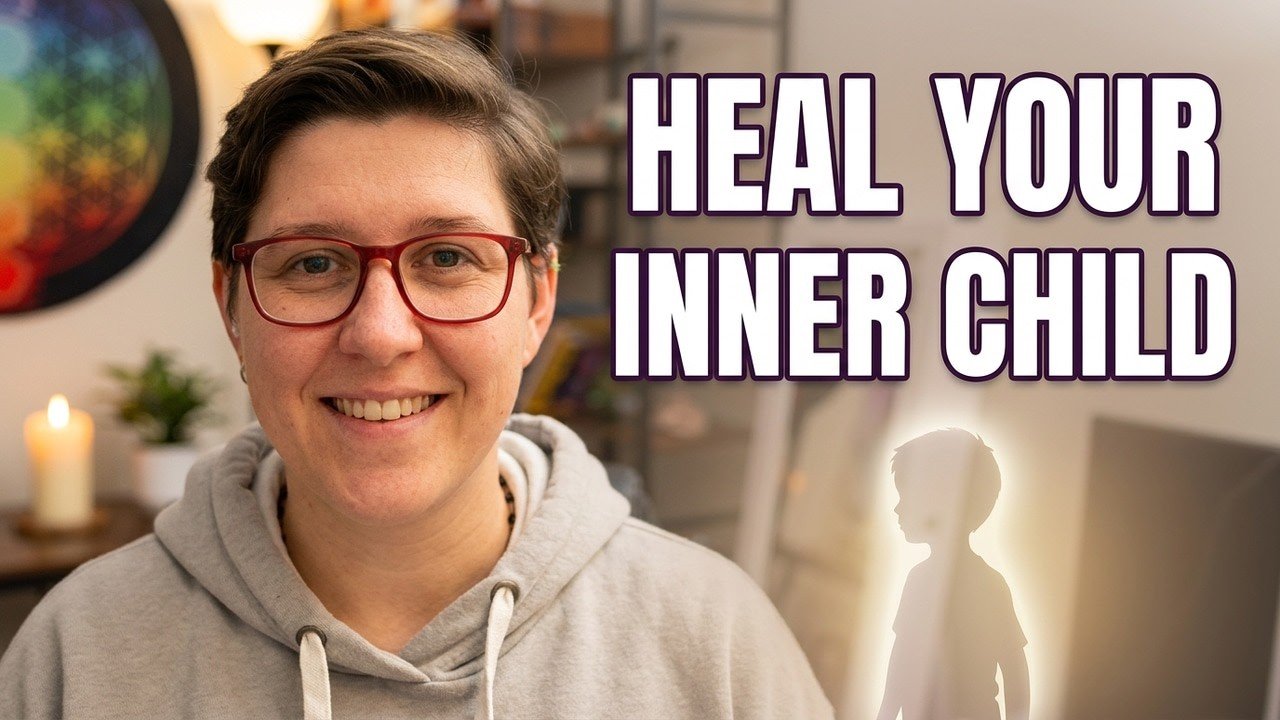
  • Guided Inner Child Healing Meditation: Meet Your Younger Self and Release What You Have Carried

    Guided Inner Child Healing Meditation: Meet Your Younger Self and Release What You Have Carried

    Some of the feelings we carry as adults began long before we had words for them. A fear that shows up in new situations, a quiet sense of not being enough, a sadness that seems older than the moment we are in. Inner child work invites us to meet the younger version of ourselves who first felt these things, and to offer them the care they may not have received at the time.

    This guided inner child healing meditation is a gentle, imaginative journey of about 20 minutes. You will clear and protect your energy, travel inward to meet your younger self, and symbolically release the emotional weight you may have been carrying for years.

    What Is Inner Child Work?

    The “inner child” is a way of describing the parts of us shaped by early experiences: the needs, feelings and beliefs we formed when we were young. Many people find that when they approach these parts with curiosity and compassion, old patterns become easier to understand and gently change.

    In this meditation, inner child work is approached through breath, visualization and intention. It is a reflective practice, not therapy, and it is not meant to replace support from a licensed mental health professional.

    What Happens in This Meditation

    1. Breathing and clearing. You begin with 11 slow breaths, then imagine bright light moving from the top of your head down through your body, and a shower of white light washing over you.
    2. Creating a protective space. With your hands at your heart, you imagine a warm golden light expanding within you and forming a soft glowing egg around your body, a space where only what supports you can enter.
    3. Relaxing deeper. With each exhale, heaviness such as anger or frustration flows down through your body and back into the earth.
    4. The journey inward. From the top of a hill, you walk down a spiral staircase, counting from five to one, and meet your inner protector, a presence that has always been with you.
    5. Meeting your younger self. Together you travel to the place where your story began. You find your younger self, take their hands and notice what they have been carrying, like a heavy sack on their shoulders: fear, sadness, loneliness, not feeling enough.
    6. Releasing by the fire. You acknowledge these emotions, honor where they came from, and one by one place them into a warm fire, then the whole sack, feeling lighter as they transform.
    7. Returning. You tell your younger self how proud you are of them, embrace them with love and let them go, then slowly return up the stairs and back into your body.

    How to Get the Most From It

    • Choose a quiet, private time when you will not be interrupted for about 20 minutes.
    • Sit upright or lie down, whichever feels most comfortable and safe.
    • Use headphones so you can follow the voice guidance closely.
    • Keep a journal and a glass of water nearby for afterward.
    • Let the images come naturally. There is no right answer to what you see or feel.

    A gentle note: inner child work can bring up strong emotions. You are always in charge of the pace. If something feels like too much, open your eyes, feel your feet on the ground and take a few slow breaths. If difficult memories or feelings stay with you, please reach out to a licensed therapist or counselor for support.

    Reflect After the Meditation

    Take a few quiet minutes to write about your experience:

    • How old was my younger self, and what did they seem to need?
    • Which emotion felt heaviest in the sack I was carrying?
    • What did it feel like to hear, “I am so proud of you”?
    • What is one small way I can care for my inner child this week?

    If you would like to keep noticing the patterns that come up, the Empower Soul Path app offers guided check-ins where you can reflect on your emotions and body signals over time. You may also enjoy our guided aura cleansing meditation for releasing emotional weight held in the body.

    To continue this work between meditations, try writing a letter to your inner child or repeating these inner child affirmations.

    Be Gentle With Yourself

    Meeting your inner child is not a one-time event. It is a relationship you can return to again and again, each time with a little more understanding. Every time you listen with kindness, you give both your younger self and your present self more room to feel safe and free.

    Thank you for being here. For more guided meditations, you are warmly invited to subscribe to the Empower Soul Path YouTube channel.

    Keep exploring: read our full Inner Child Work guide for more practices, or try the Empower Soul Path app.

  • Guided Aura Cleansing Meditation: Release the Emotional Weight You Carry on Your Back

    Guided Aura Cleansing Meditation: Release the Emotional Weight You Carry on Your Back

    Some weights are easy to name. Others settle quietly into the body over the years: into the neck, the shoulders, the space between the shoulder blades. We keep going, we keep carrying, and we rarely pause to ask what exactly we are holding.

    This short guided aura cleansing meditation is an invitation to stop for a few minutes and let some of that weight move. You’ll bring gentle awareness through your body, from your neck all the way down to the soles of your feet, and allow what no longer needs to be held to flow out and away.

    Why the Back?

    Our language often knows what the body feels. We say “a weight on my shoulders,” “carrying the world on my back,” or “I’ve got your back.” In many spiritual and somatic traditions, the back is seen as the place where we hold what we’ve been responsible for: what’s behind us, what we never said, and what we’ve shouldered for others.

    This isn’t a medical explanation of back pain, and it’s not meant to replace care from a healthcare professional. Here, we simply explore the back as a symbol and as a place to bring awareness, a gentle way of asking: What have I been carrying?

    What Is Aura Cleansing?

    In many traditions, the aura is described as a subtle energy field that surrounds the body. Aura cleansing uses intention, breath and imagery to clear what feels heavy or stuck.

    You don’t need to “see” energy or hold any particular belief to try it. You can think of it as guided attention: moving through the body with kindness and letting your imagination support the feeling of release. Many people find it deeply calming and grounding.

    What Happens in This Meditation

    1. Arriving. You begin by bringing awareness to the emotions you may have carried for years, and to the old memories held in your body.
    2. Softening the upper body. Attention moves to your neck, where tension, unspoken words and pressure may live, and then to your throat and chest, inviting them to open and loosen.
    3. Moving through the back. You bring awareness to your upper back, the place where you may have carried too much for too long, then your middle back, lower back and entire spine, letting them begin to melt.
    4. Letting it flow downward. A gentle flow travels through your chest, stomach, belly, pelvis and hips, down through your legs, knees, ankles and feet, and out through the soles of your feet.
    5. Repeating with your own words. The sequence is repeated in the first person (“Now I am releasing the emotions that are stuck in my neck, my throat, my chest…”), helping the intention settle deeper.
    6. Allowing. As energy moves, you may notice warmth or coolness, tingling, waves, chills or goosebumps. If your body wants to shake, let it shake. If it feels heavy, let it be heavy. If it feels light, let it be light. Nothing needs to be controlled.
    7. Stillness. As sensations soften, you rest in the quiet and notice the space you’ve created, and the lightness that remains.

    How to Get the Most From It

    • Find a quiet place where you can sit or lie down comfortably.
    • Use headphones if you can.
    • Try it in the evening, after a heavy day, or whenever you notice tension building in your neck or back.
    • Repeat it a few days in a row and notice what changes.

    A gentle note: you are always in charge of the pace. If any sensation feels too intense, open your eyes, feel your feet on the floor and take a few slow breaths. Meditation can be a supportive practice, but it isn’t a substitute for professional medical or mental health care.

    Reflect After the Meditation

    Take a few minutes with a journal and explore:

    • Where in my body did I notice the most holding?
    • If that weight could speak, what would it say?
    • What am I carrying that isn’t mine to carry?
    • What does “lighter” feel like in my body right now?

    If you’d like to keep noticing what comes up, the Empower Soul Path app offers guided check-ins where you can note your body signals and emotions over time and gently begin to see your own patterns.

    Curious what other areas of your body may be expressing? Read Body Symbolism: what your shoulders, back, stomach and more may be telling you.

    You Don’t Have to Release Everything at Once

    Release is rarely a single moment. It’s a relationship you build with your body, one pause at a time. Each time you stop and listen, you give yourself a little more room to breathe.

    Thank you for being here. For more guided meditations, you’re warmly invited to subscribe to the Empower Soul Path YouTube channel.

    Keep exploring: read our full Breathwork for Calm guide for more practices, or try the Empower Soul Path app.